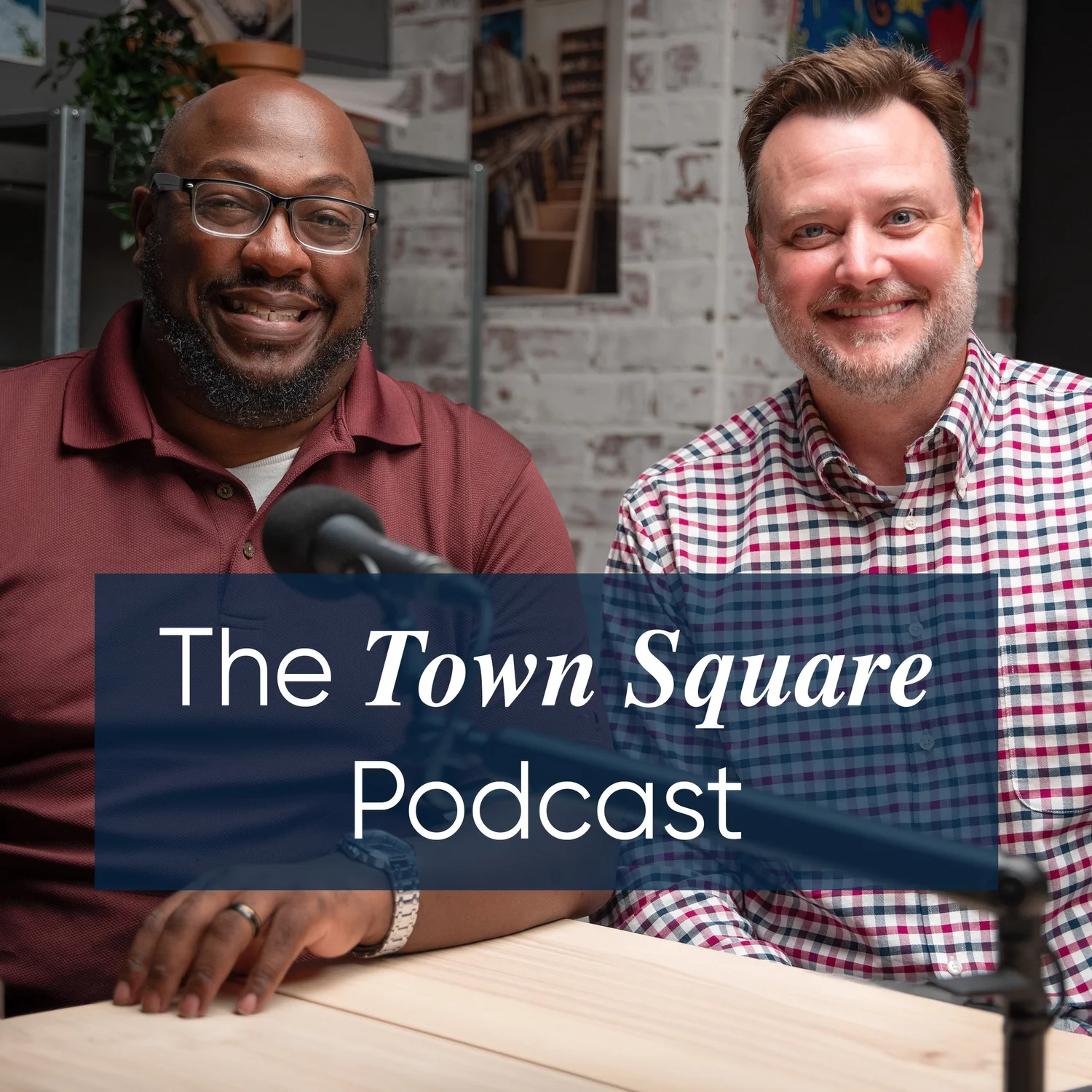

Rev. Dr. Eric Lee on Affordability, Schools and Growth | Candidate Conversations – Episode 107
Use the audio-player above to listen here, or click one of the following links to listen on
Apple Podcasts or Spotify. Or click on the photo below to watch on YouTube.
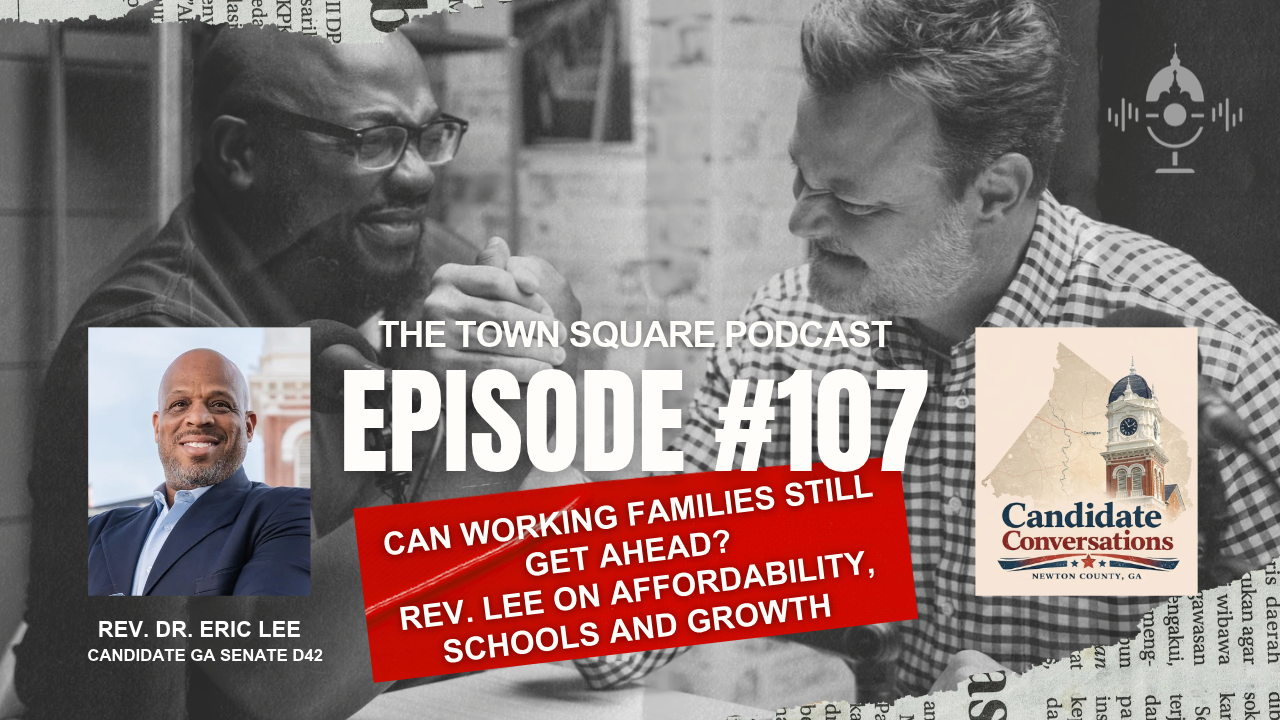
Our Candidate Conversation series continues as Trey Bailey welcomes Rev. Dr. Eric Lee, candidate for Georgia Senate District 42.
A young family moves in with relatives, works to get on its feet, and hopes a first home is somewhere within reach. Rev. Dr. Eric Lee knows that experience personally. In this conversation, he recalls receiving food assistance and substitute teaching during the year he began pastoring Springfield Baptist Church. Six months later, he says, his family bought its first home.
Now he looks at his own children and wonders how many young adults can still make that kind of move.
That question runs through Episode 107 of The Town Square Podcast. Lee joins Trey Bailey for our continuing Candidate Conversation series to discuss his run for Georgia Senate District 42 and the priorities he would bring to the Gold Dome. Affordability gets much of the attention, but the conversation also asks what makes a community worth living in and what residents should expect from the people who represent them.
A pastor with family on both sides of the affordability question
Lee and his wife came to Newton County in 1999 with a young son. Their family grew to five children, and his ministry at Springfield grew with the community. He talks warmly about Mansfield Elementary, where his wife worked as a speech therapist and their first three children attended school.
His decision to run is rooted partly in the stage of life he occupies now. He has aging parents and children beginning their adult lives. Healthcare, housing, and the cost of getting established feel immediate when he thinks about both generations.
Lee also describes how ministry has shaped his understanding of influence. He recalls the sense of calm he felt hearing Senate Chaplain Barry Black pray in the aftermath of January 6. The moment helped him think about the importance of bringing his voice into places where public decisions are made.
“It’s not just what you say,” Lee says. “It’s where you say it.”
He sees public service as another opportunity to help people, while recognizing that representing a district means reaching people beyond his own congregation.
Making a first home feel possible again
For Lee, homeownership is one measure of whether hard work can still lead to stability. He wants first-time buyers to have a better chance of purchasing a primary residence, and he argues that competing with corporate buyers can put families at a disadvantage.
He calls for incentives for first-time homebuyers and consideration of ways to limit direct competition from corporate entities. These are priorities he wants lawmakers to pursue; the conversation does not lay out a completed bill or a detailed financing plan.
Trey connects the issue to the character of a neighborhood. A home can give people a reason to invest in the place and the neighbors around them. Lee’s concern is that families who work and save should have a realistic opportunity to put down those roots.
Fuel costs and access to healthcare
Lee also raises shorter-term relief from fuel costs. He suggests considering periods of suspended state gas taxes, with attention to travel seasons and the fuel needs of farmers. His argument is that transportation costs reach beyond the pump and affect the price of producing and moving food.
On healthcare, he supports Medicaid expansion. He points to North Carolina as an example and argues that broader coverage could help Georgians afford care and reduce pressure on hospitals. Trey and Lee connect that discussion to their experience around a hospital board table, where financial decisions have practical consequences for local care.
The proposals give listeners a sense of where Lee would focus. They also leave room for the questions that follow any policy idea: how it would be funded, who would benefit, and how lawmakers would measure whether it works.
Tax relief without leaving schools short
Property taxes bring the discussion directly into Trey’s work on the school board. Families need relief, especially seniors at risk of being priced out of homes they have already paid for. Schools and other public services still need dependable funding.
Lee argues that those responsibilities can be addressed together. He favors looking at relief based on income and says revenue removed from one place has to be accounted for somewhere else. He is skeptical of sweeping promises to eliminate taxes without explaining how essential services would continue.
“We should all have skin in the game,” he says.
He also challenges the idea that a large state surplus, by itself, proves government is meeting its responsibilities. His concern is whether needs in healthcare, education, and infrastructure remain unmet while money sits unused. The conversation makes the tradeoff concrete: a tax decision eventually reaches a classroom, a school bus, a hospital, or a household budget.
Data centers and the need for public answers
When the conversation turns to data centers, Lee resists an easy yes-or-no answer. He describes them as growth that communities will have to manage and calls for a substantial role for local control.
His concerns include energy demands, the distinction between temporary construction jobs and permanent employment, and the information residents receive before decisions are made. He questions the use of nondisclosure arrangements in a process that affects the public.
Trey raises the possibility of appropriately located industrial development helping support local services, while acknowledging the concerns of people living nearby. Lee encourages people to keep learning and to approach educational discussions with an open mind.
The exchange leaves listeners with a useful set of questions: What is being promised? What will the community be responsible for? And how much will residents know before a decision is final?
What wages have to do with community life
Lee supports raising wages, but he does not offer a specific minimum-wage target in this interview. He says employers and economists need to be part of the discussion and acknowledges concerns about the effects on small businesses.
He describes conversations with people whose employees work multiple jobs to make ends meet. The issue, in his telling, is both income and the time left over for living.
Trey follows that thought into the community. If someone can meet expenses with one job instead of several, there may be time to attend a child’s game, volunteer, or participate in church. Lee adds Bible study to the list. It is a small exchange that explains why the conversation keeps returning to quality of life.
Representing the whole district
Lee’s view of community investment includes places where people meet outside political arguments. He talks about the Cricket Frog Trail, local arts events, and Springfield’s support for the Fuzz Run. Those experiences, he says, can help neighbors get to know one another.
Asked what distinguishes his candidacy, Lee says he wants to represent the entire district. He rejects a county-against-county approach and says he is seeking support from people across political affiliations. He wants voters to consider what their communities could become.
That is also the purpose of making time for a full Candidate Conversation. A campaign name on a sign tells you very little about how a person thinks. This episode gives listeners time to hear Lee’s reasoning, weigh his proposals, and decide which questions they want their next state senator to answer.
Watch the full conversation: https://youtu.be/-iZSh6fJfvg
Links Mentioned
Rev. Dr. Eric Lee campaign website - https://ericleeforgeorgia.com
Springfield Baptist Church - https://www.sbcgrowth.church
Watch Episode 107 on YouTube - https://youtu.be/-iZSh6fJfvg
Sponsors and Advertisers
United Bank — Covington Branch
Thank you to United Bank’s Covington Branch for supporting local conversations on The Town Square Podcast. United Bank offers personal and business banking, mortgage services, and financial planning. Stop by the Covington office or visit the website to learn more, and let the team know you appreciate their support of the show.
Member FDIC. Equal Housing Lender.