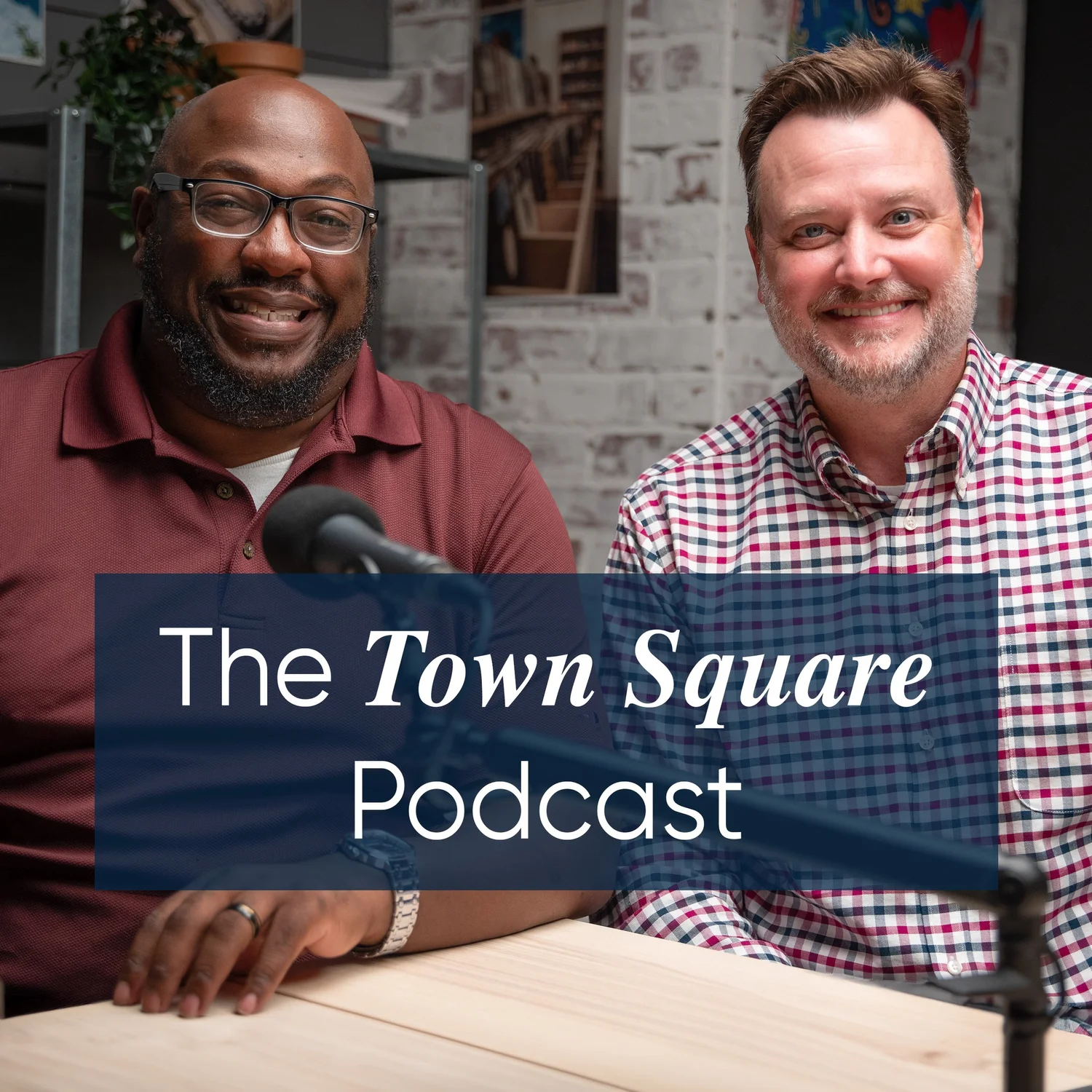

Click one of the following links to listen on
Apple Podcasts or Spotify. Or click on the photo below to watch on YouTube.
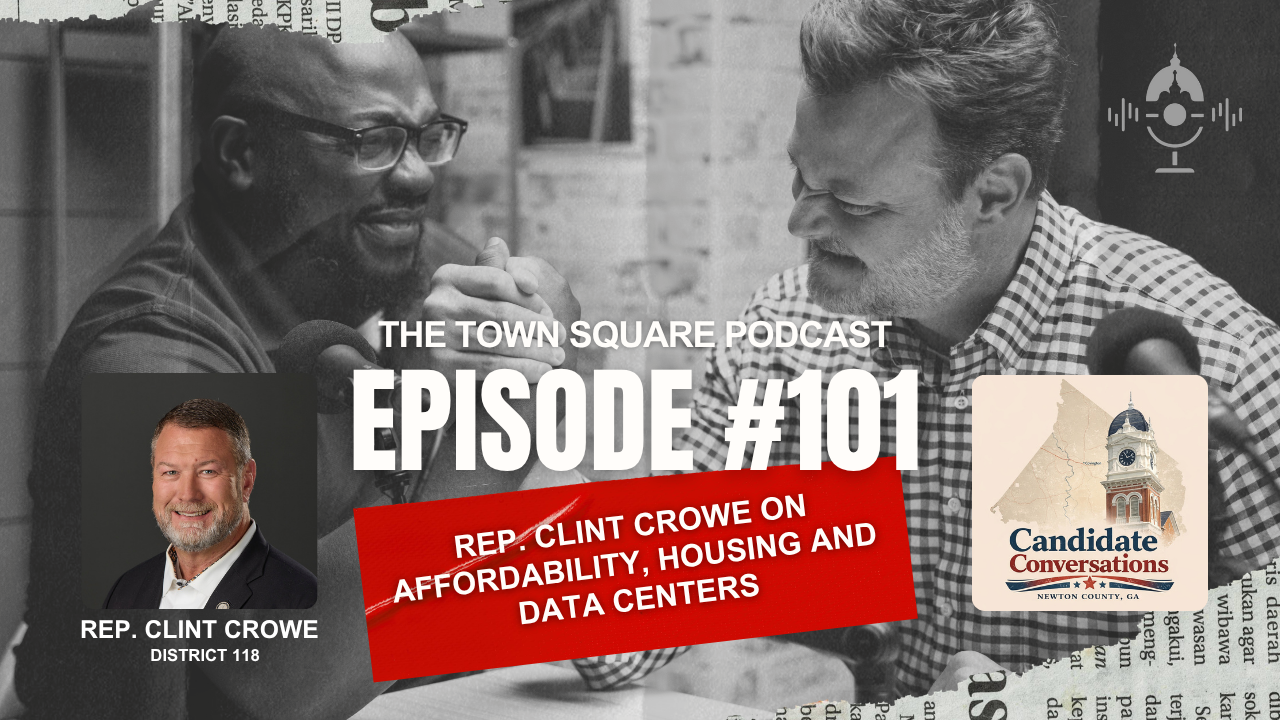
The Cost of Staying Home: Clint Crowe on Property Taxes Housing and Data Centers
For many homeowners, affordability is no longer an abstract campaign issue. It is the tax bill on a house they have owned for decades, the price of a starter home their children cannot afford, and the argument over whether new development will ease the pressure or create new costs.
Representative Clint Crowe brings several perspectives to that conversation. He represents Georgia House District 118, chairs the House Public Safety and Homeland Security Committee, serves on Ways and Means and four other committees, and has worked in law enforcement and real estate. In Episode 101 of the Town Square Podcast, he explains how those experiences shape his approach to taxes, housing, data centers, and the work of representing a district that includes parts of Newton, Butts, and Monroe counties.
This Candidate Conversations episode presents Crowe’s record and positions in his own words as voters prepare for the November election.
A Career Built Across Public Safety and Real Estate
Crowe was first elected in 2020 and took office in 2021. Before entering the legislature, he volunteered with a fire department, worked as a 911 dispatcher, served in law enforcement, and built a real estate company with his family. He describes those jobs as different versions of the same work: dealing with people, solving problems, and trying to find an outcome that competing sides can accept.
His family story also informs the way he talks about public service. Crowe and his wife, Kristie, raised two sons and later adopted a great-niece and great-nephew who came to live with them as very young children. He says his decisions at the Capitol affect his own children and grandchildren along with the rest of the district.
Why Legislation Moves Slowly
Crowe offers a practical explanation of a process that often looks needlessly slow from the outside. A House bill may pass through subcommittee hearings, a full committee vote, the Rules Committee, and the House floor before beginning a similar path in the Senate. Tax referendums and some other measures require a two-thirds House vote rather than a simple majority.
He argues that the friction is intentional because state policy must work across communities that differ sharply in population, tax base, and public-service needs. Crowe says committee hearings are among his favorite parts of the job because local officials and residents can explain how a proposal would affect them before lawmakers vote.
The Property Tax Question
The longest policy discussion begins with residents who fear being priced out of homes they already own. Crowe says he has heard from seniors on fixed incomes who cannot keep up with rising property-tax bills. His guiding view is that a primary residence should eventually become secure from that pressure. In his words, a homeowner should not have to “continuously rent that from the government for your entire life.”
Crowe discusses House Bills 581 and 92, including the effort to limit increases in taxable value through a floating homestead exemption. He also describes a proposal that did not pass in the most recent session: replacing property taxes on homesteaded homes with revenue from an additional one-cent sales tax and other funding sources.
He acknowledges the central tradeoff. Local governments and school systems depend on property-tax revenue, and a sales tax spreads costs to renters and consumers as well as homeowners. Crowe argues that visitors would pay part of the sales tax, while communities with weaker retail activity would need another way to replace lost revenue. The episode does not pretend that the arithmetic is simple.
Housing Costs Begin Before Construction
Crowe also connects affordability to the shortage of homes within reach of first-time buyers and public-safety employees. Drawing on his real estate background, he says permitting delays, minimum square-footage rules, low-density requirements, infrastructure costs, and limited housing supply all raise the final price paid by a buyer.
He supports local planning and zoning, but questions rules that prevent smaller or less expensive homes even when they meet accepted safety standards. His concern is that every delay and development cost eventually appears in the home’s sale price. The policy tension is familiar: communities want control over growth, while the same restrictions can narrow the supply of attainable housing.
Data Centers and Local Control
The conversation then moves into one of Newton County’s most contentious subjects. Crowe opposes broad moratoriums on data centers and believes local comprehensive plans should determine where major industrial uses belong. He points to Stanton Springs as an example of placing a data center inside an established technology and industrial area rather than near homes.
Crowe frames data centers as infrastructure tied to artificial intelligence, economic competition, and national security. He also recognizes the concerns that residents raise about electricity, water, noise, tax incentives, and the number of permanent jobs. He argues that large users should pay for the infrastructure their projects require and that local governments must use new revenue in ways that benefit their residents.
Several statements in this part of the interview, including Crowe’s claims about foreign misinformation and water-use patterns, are his assessments as presented in the episode. His broader position is clear: he favors case-by-case local decisions, careful siting, and financial safeguards rather than a statewide stop.
Showing Up as the Measure of Representation
When asked why voters should return him to office, Crowe emphasizes responsiveness. He recounts a conversation with a Democrat who disagreed with him on several issues but voted for him because, as the voter put it, “I know you show up.” Crowe says he wants residents to judge him by his positions and his accessibility rather than by the party label alone.
That answer fits the larger conversation. Crowe does not claim that every policy problem has an easy fix. He argues instead that experience, access, and a willingness to explain a vote matter when the issues involve competing taxpayers, local governments, schools, businesses, and neighborhoods.
Episode 101 gives District 118 voters a sustained look at how Crowe reaches those judgments. The purpose of Candidate Conversations is to let voters hear that reasoning directly and decide how well it matches their own priorities.
Links Mentioned
Watch Episode 101 on YouTube: https://youtu.be/XjBIapdxdqI
Georgia General Assembly member directory: https://www.legis.ga.gov/members/house/5002
Crowe for Georgia: https://croweforgeorgia.com/
Georgia General Assembly legislation search: https://www.legis.ga.gov/legislation/all
Sponsor
United Bank Mortgage
United Bank Mortgage offers conventional, jumbo, government-backed, first-time homebuyer, and Community First mortgage options. Its local lenders help borrowers understand available programs and move from application through closing. Learn more at https://www.accessunited.com/mortgage/mortgage-services or visit a United Bank office.United Bank. Member FDIC. Equal Housing Lender. NMLS number 413054.