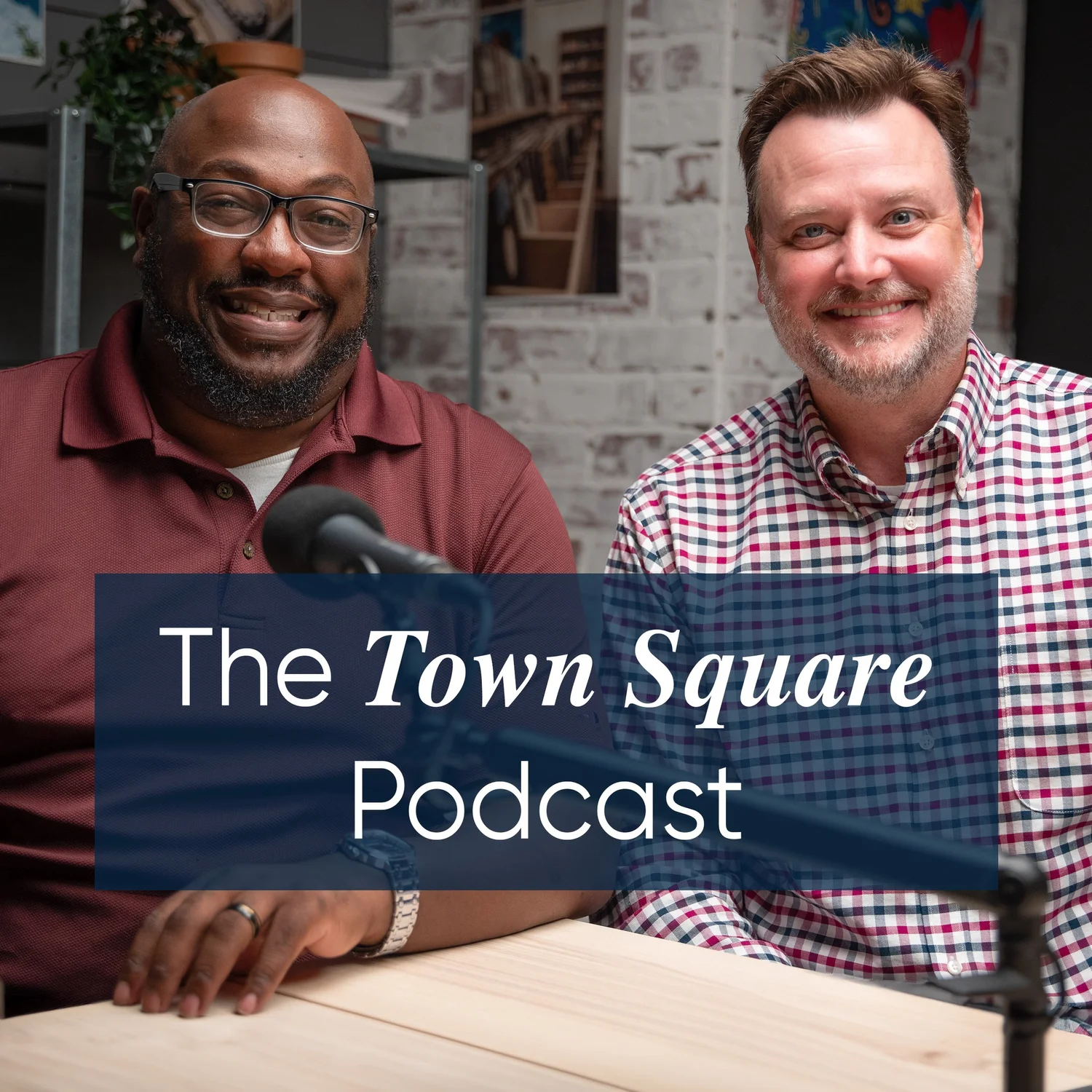

Councilman Dwayne Turner: Transparency, Tradition & Growth — Episode 78
Use the audio-player above to listen here, or click one of the following links to listen on
Apple Podcasts or Spotify. Or click on the photo below to watch on YouTube.
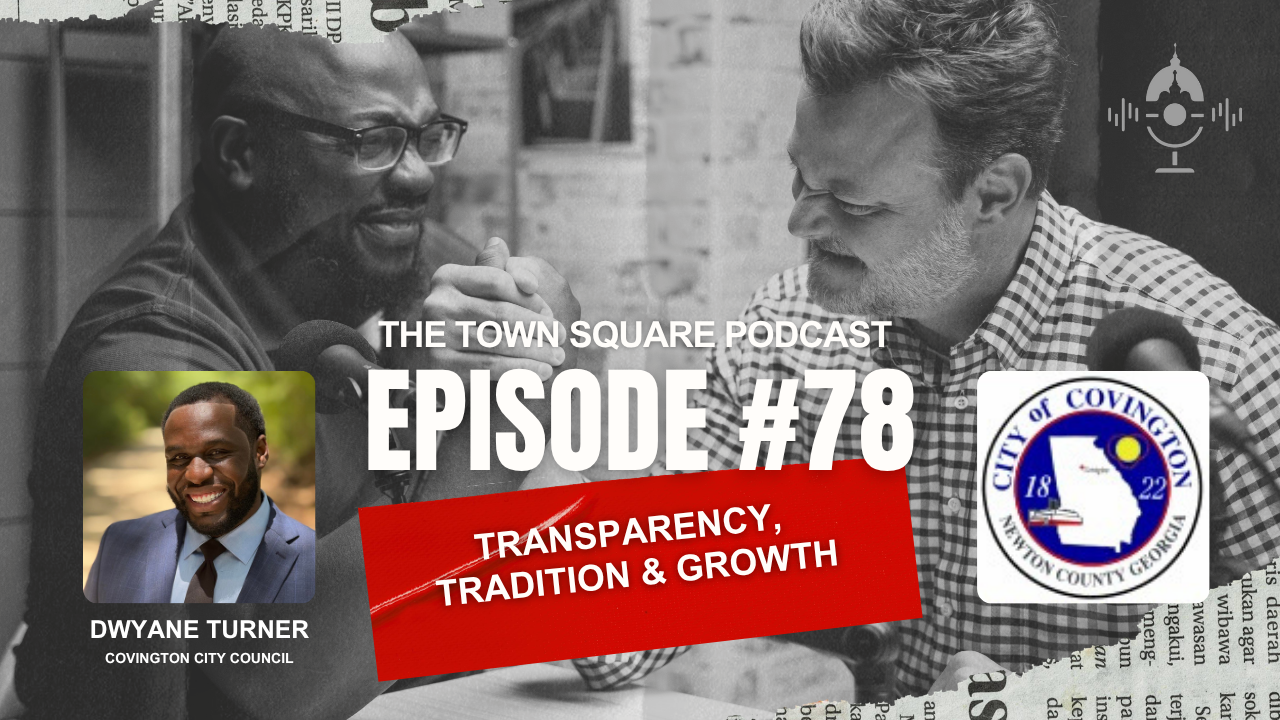
In Episode 78 of The Town Square Podcast, Trey Bailey sits down with newly elected Covington City Councilman Dwayne Turner. With Gabriel Stovall away on assignment, Trey leads a one-on-one conversation designed to help listeners get to know one of Covington’s newest public servants, understand what drives him, and hear how he is thinking through some of the city’s most debated issues.
Turner is still early in his first term, but he is already stepping into the kind of tough, public-facing decisions that come with city leadership. In this conversation, he talks about his background in public service, what led him to run for office, how his experience in law enforcement shapes his perspective, and why he keeps coming back to a few key themes: transparency, representing the people, protecting Covington’s traditions, and making sure growth doesn’t outpace infrastructure.
From Pennsylvania to Covington
Turner shares that he is not originally from Newton County. He was born in a small town in Pennsylvania south of Pittsburgh, later lived in New York, and then joined the Army. After 11 years of military service and living in different places, he eventually landed in Covington, where he decided to put down roots.
That journey matters because it helps explain how he views public service. Turner comes from a family deeply connected to service-oriented professions. His father served in the military and law enforcement. His mother and grandmother worked in nursing. Other family members served in transportation and public-facing roles. For Turner, service was not some abstract idea. It was modeled for him throughout his life.
That background ultimately led him into law enforcement, which he still describes as his dream job. Today, he works in investigations with the Rockdale County Sheriff’s Office, a role he says he genuinely loves.
A Neighborhood Mindset That Became a Citywide Campaign
One of the more interesting parts of the conversation is how Turner explains the leap from local neighborhood involvement to elected office. Before serving on city council, he was involved in HOA leadership, where he learned firsthand how quickly neighborhood concerns can pile up. What starts as a few complaints about trash, lawns, or rules can quickly become a full-time exercise in listening, explaining, and solving problems.
Turner sees that experience as meaningful preparation for city government. In both spaces, people want to be heard. They want communication. They want follow-through. And often, they are frustrated not just by the issue itself, but by the feeling that no one is talking to them clearly.
That theme of communication came up repeatedly in the episode. Turner says one of the most surprising things he heard on the campaign trail was that many residents did not even know who represented them. That realization helped sharpen his approach. If he was going to serve, he wanted people to know who he was, how to reach him, and how he was thinking through major votes.
“It’s About People, Not Politics”
One of Turner’s central campaign ideas was that public service should be about people, not politics. In the interview, he unpacks what he means by that phrase.
For him, politics can become about holding a seat, protecting status, or building influence. People-first leadership, by contrast, means listening to the residents who put you in office and trying to act on their behalf. It means not silencing their voices, not hiding behind vague language, and not pretending controversial decisions are easy.
Again and again, Turner describes himself as a representative. He says his role is not to impose his will, but to carry the concerns of the people who elected him. Whether the issue is fireworks, growth, a special use permit, or city fees, he insists that his first obligation is to the residents he serves.
That representative mindset is one of the clearest themes in the conversation.
Transparency as a Core Value
If there was one word that surfaced throughout the episode more than any other, it was transparency.
Turner acknowledges that transparency can sound like a buzzword, but he believes the reason it gets repeated so often is because the public is hungry for it. People want to know what government is doing, why decisions are being made, and what elected leaders actually believe.
He says that desire for openness shaped his campaign and continues to shape his service. That is why he posts updates online. That is why he explains votes publicly. That is why he says he wants people to contact him directly if they have concerns.
In Turner’s view, transparency is not just about releasing information after the fact. It is about bringing people into the process, listening before the vote, and being honest afterward.
Growth, Development, and Infrastructure
Turner also spends significant time discussing one of the biggest issues facing Covington: growth.
He is clear that he is not opposed to development in principle. He understands that growth and economic activity matter. But he is concerned about infrastructure failing to keep pace with the speed of new residential and commercial expansion.
He points specifically to traffic bottlenecks and roads that are already strained, especially in areas where apartment growth and neighborhood expansion are putting pressure on two-lane corridors. He describes situations where residents struggle to get out of their subdivisions because traffic has become so heavy.
For Turner, “smart growth” means slowing down enough for infrastructure to catch up. It means asking whether the roads, intersections, and surrounding systems can actually support the projects being approved. It also means protecting what residents love most about Covington, especially the traditional character centered around the square.
He repeatedly returns to the idea that Covington’s identity is tied to its traditions, and that those traditions should not be sacrificed carelessly in pursuit of rapid expansion.
Preserving the Small-Town Feel
Turner knows Covington is growing and that Newton County is not the same place it was years ago. Still, he says residents continue to value the “small-town charm” of Covington, especially the sense of tradition anchored around downtown.
He does not define that charm simply as a lack of growth. Instead, he describes it more as a culture and a feel — a set of traditions and a way of community life that people do not want to lose.
That is why the square matters so much in his view. It is the symbolic and practical center of Covington. When residents talk about preserving what they love, they are often talking about the experience and identity rooted there.
Stormwater Fees, Taxes, and City Revenue
Another major topic in the episode is Turner’s campaign promise to fight for relief on stormwater fees and taxes.
He explains that one of his core ideas during the campaign was that new city revenue — especially revenue tied to major developments already in motion — should be used to reduce the financial burden on residents where possible. He points specifically to the Amazon data center as a potential revenue source that could help the city rethink how it funds certain services.
Turner’s argument is not that infrastructure costs disappear. His point is that when a city gains a significant new stream of revenue, leaders should ask whether some of that money can be used to eliminate or reduce fees that residents strongly dislike.
He frames this as both a financial and moral question. If the city is going to accept major development that many residents do not necessarily want, then city leaders should work hard to ensure the community meaningfully benefits from it.
He also expresses strong sympathy for seniors and long-time residents who feel increasingly squeezed by taxes and rising costs. In his view, part of leadership is finding creative ways to preserve affordability for the people who helped build the community in the first place.
The Fireworks Debate
One of the most interesting parts of the episode is Turner’s discussion of Covington’s controversial fireworks decision.
Turner makes clear that he values tradition and would prefer to preserve major community events where possible. At the same time, as someone with a law-enforcement background, he also takes public safety seriously.
His perspective is that the issue should not be framed too simply. Rather than assuming the event could not be done safely, he believes the city should consider whether better planning, more experienced event support, or stronger coordination could help improve outcomes. He compares large public gatherings in Covington with major venues that also handle crowd control and safety concerns.
Turner is careful not to dismiss the city’s safety concerns. But he does suggest that if the will exists, leaders should keep searching for solutions before abandoning a long-standing tradition entirely.
That balance — tradition on one hand, public safety on the other — is exactly the kind of messy local issue this podcast is built to explore.
The Tattoo Shop Vote
Another local issue discussed at length is the debated special use permit for a tattoo and piercing studio on the square.
Turner’s comments here reveal the tension that often comes with representative government. He openly admits that his personal view was not strongly opposed to the business itself. He says he does not have a broad philosophical problem with someone opening that kind of business.
But when it came time to vote, he says he felt compelled to follow the wishes expressed by the residents who contacted him. In other words, even though his personal opinion may have leaned one way, he believed his duty as a councilman required him to vote the other way.
That is a revealing moment in the episode. Turner describes it as a real internal struggle. He says he could not vote for himself in that moment; he had to vote for the people he represents.
Whether listeners agree with that vote or not, the conversation offers a rare look at how an elected official thinks through competing pressures: personal opinion, constituent feedback, business opportunity, and community identity.
Law Enforcement and City Leadership
Turner’s law-enforcement background adds an important dimension to the conversation.
He notes that his professional experience gives him a different lens on public safety issues than some other council members may have. Whether discussing ordinances, large events, or city decision-making, he brings a perspective shaped by investigation, accountability, and on-the-ground public service.
At the same time, he pushes back against broad negative narratives about law enforcement. He emphasizes the community-oriented and preventative side of the work, not just the crisis-response side. He also speaks positively about how Newton County residents have treated him as a law-enforcement officer and public servant.
That part of the episode helps listeners understand that Turner is not arriving on council from nowhere. He is bringing a professional framework with him — one built around order, service, and public responsibility.
One Newton
Near the end of the episode, Turner talks about something larger than city politics: the idea of One Newton.
Though he is a city councilman, he says he does not want to treat the city and county like enemies or isolated camps. In his view, Covington matters, but so do Oxford, Porterdale, Mansfield, Newborn, and the rest of the county. He believes local leaders should still think broadly about Newton County as a shared community.
That perspective fits well with the larger mission of The Town Square Podcast. It also gives listeners a better sense of how Turner sees his role — not just as a city official, but as part of the wider civic life of Newton County.
Final Thoughts
In this episode, Councilman Dwayne Turner comes across as energetic, direct, and deeply committed to constituent representation. He is still new to office, but he is clearly thinking hard about the responsibilities of public service.
He emphasizes transparency. He values tradition. He wants infrastructure to catch up with growth. He is looking for ways to ease burdens on residents. And he is trying, in his words and actions, to vote with the people he represents in mind.
Whether listeners agree with him on every issue or not, this conversation gives them something valuable: a chance to hear how one of Covington’s newest elected officials thinks, serves, and wrestles with the real tensions of local leadership.
⸻
How to Contact Councilman Dwayne Turner
Councilman Dwayne Turner invited residents to reach out directly.
Facebook: Councilman Dwayne Turner
Email: Turner30014@yahoo.com
Phone: 516-439-1018
⸻
Sponsors / Advertisers Featured in This Episode
SCB Construction Group
SCB Construction Group is a locally connected, community-driven contractor serving commercial clients across Georgia and beyond. Their work includes turnkey design-build, design-bid, and commercial contracting services for manufacturing facilities, distribution centers, church buildings, sports complexes, office spaces, and retail spaces.
Website: scbcg.com
Luther Rice College & Seminary
Luther Rice College & Seminary offers biblically based, fully online educational programs for dual enrollment students, undergraduates, adult learners, ministry leaders, and doctoral students. Their programs are designed to help students pursue their calling from a Christian worldview.
Website: lutherrice.edu