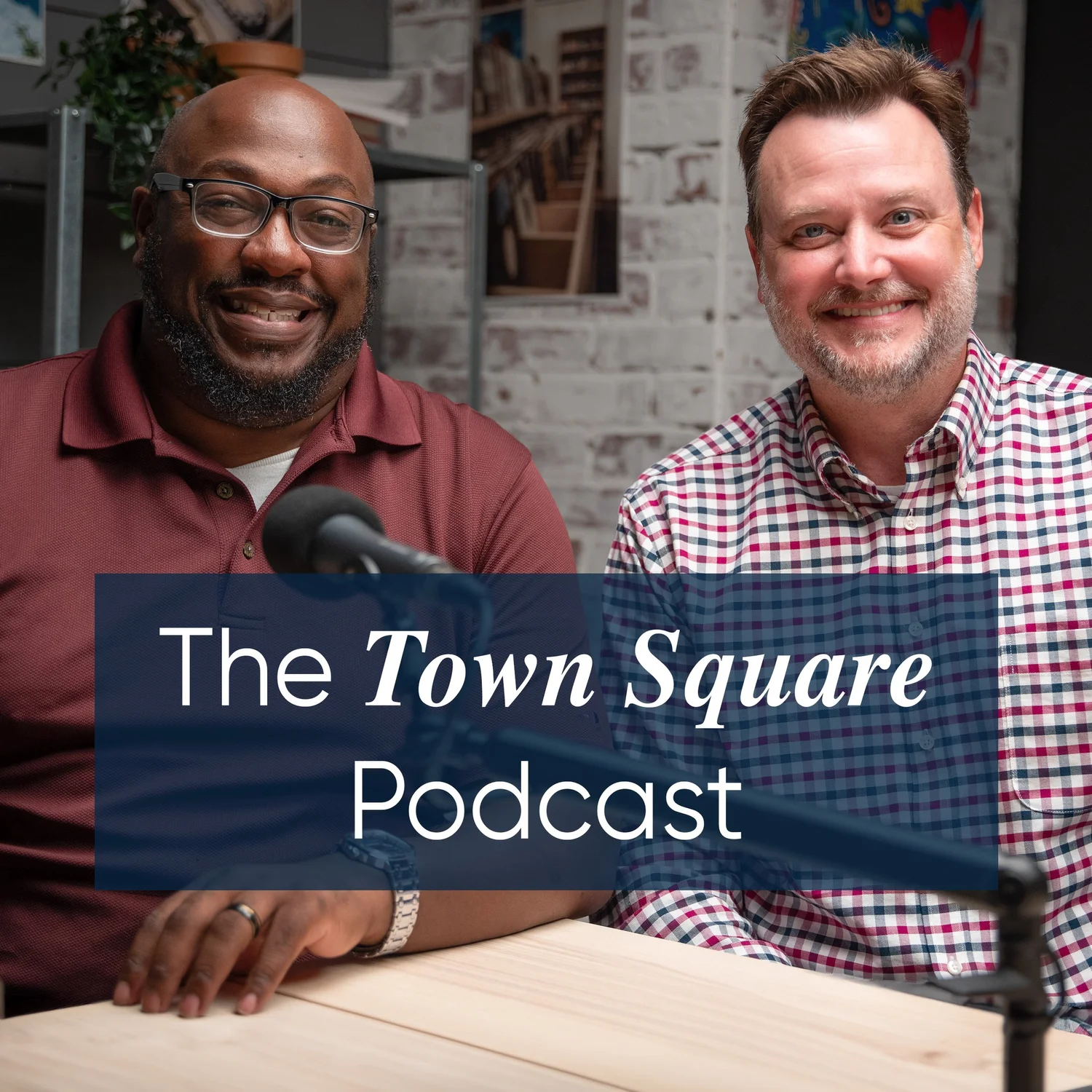

Karla Hooper: Integrity, Healing & Representation | Candidate Conversations — Episode 79
Use the audio-player above to listen here, or click one of the following links to listen on
Apple Podcasts or Spotify. Or click on the photo below to watch on YouTube.
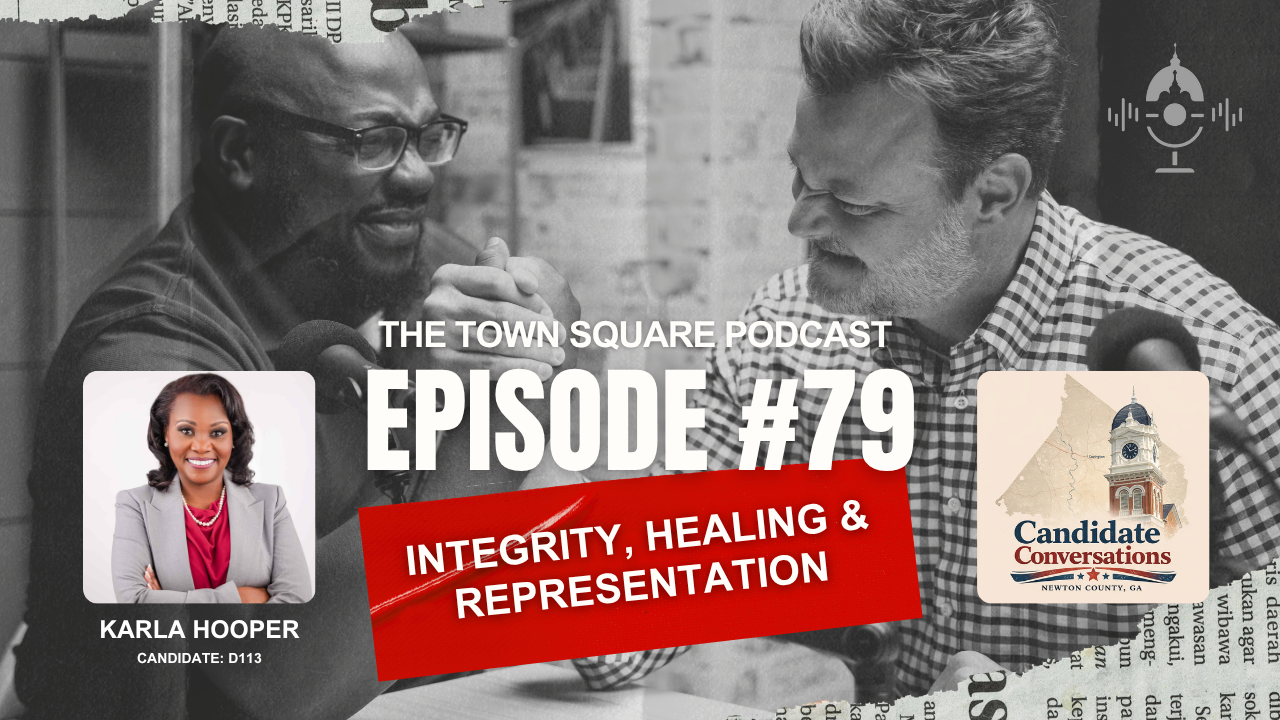
The Town Square Podcast continued its Candidate Conversations series with Karla Hooper, candidate for Georgia House of Representatives District 113. As Trey Bailey and Gabriel Stovall explained at the top of the show, the goal of this series is not to create more political noise, but to give voters a fair, thoughtful way to hear directly from the people asking to represent them. In a climate where partisanship often drowns out substance, this episode aimed for something different: a calm, honest conversation about background, motivation, policy, and public service.
That framing fit Hooper’s tone well. Throughout the episode, she presented herself not as a career politician chasing office, but as a longtime community advocate who sees this campaign as an extension of work she has already been doing for years.
Hooper began by sharing a little of her story. Born in Arkadelphia, Arkansas, she moved to Georgia in 1992 as a student at Emory University and eventually decided this was where she wanted to build her life. She has now lived in Newton County for more than 24 years, longer than she lived in her hometown in Arkansas. Her daughters were born and raised here, and she made clear that Newton County is not just where she lives, but home in the fullest sense.
Her entry into community involvement came from a very local frustration. After returning from a trip, she noticed a cell tower had appeared near her subdivision and wanted to know why and how that had happened. That curiosity led her to attend a Board of Commissioners meeting, which opened the door to understanding how decisions are made in local government. What started as one concern in her own neighborhood eventually grew into a broader commitment to civic engagement and public advocacy.
One of the most memorable parts of the episode came when Hooper discussed her father’s role in the Civil Rights Movement. She shared that he was among a small group of men from Arkansas who traveled to Alabama to march in Selma. In an especially moving story, she explained that seven years ago, on the Martin Luther King Jr. holiday, reporters were looking to interview her father because he was believed to be the last surviving member of that group. Remarkably, he passed away the very day they were trying to reach him.
Hooper said she did not even know about his role in Selma until she was in middle school and interviewing him for a school project. She recalled him telling her that when Dr. King spoke, it felt as though even the leaves stood still to listen. But she also explained that he and others were pulled over and jailed on the way back from Alabama, and that much of what followed was likely wrapped in trauma he never fully unpacked with his children. That family history clearly shaped her understanding of justice, advocacy, and public responsibility.
She connected that legacy to her own path. Hooper described herself as someone who has long felt drawn to leadership and service, whether in school, work, church, or the broader community. She mentioned being the first Black student government president and first valedictorian in her hometown, and later working for Bill Clinton’s presidential campaign in 1992. Rather than treating public service like a new interest, she framed it as part of a lifelong throughline.
Professionally, Hooper serves as Executive Director of the Diabetes Association of Atlanta, where she has worked for more than 18 years. That work gave depth to much of what she said later in the conversation about healthcare, working families, and affordability. She talked about seeing firsthand how many people do what society tells them to do — work hard, support their families, and check all the expected boxes — yet still cannot afford the medications, supplies, or insurance coverage they need. She described this reality as one that keeps her grounded and connected to the struggles of ordinary people.
That theme of groundedness came up repeatedly. Hooper pushed back on the idea of being seen mainly as a politician, saying she identifies more with being a public servant. She described her candidacy as something that came through prayer, reflection, and a sense of calling. In one striking moment, she said that when something burdens you so deeply it moves you to tears, you have to respond. She gave the example of calling a developer about another proposed gas station in an area already saturated with them. As she spoke to him about what the community needed, she became emotional — not because of political theater, but because of genuine concern for the people who live there.
When asked why she is running again after a previous campaign, Hooper said this moment feels different because Newton County needs healing. That word became one of the episode’s anchors. She spoke candidly about the tension, disappointment, and frustration many residents feel after years of conflict, rapid change, and difficult public debates. In her view, the next chapter of leadership in Newton County has to include bridge-building and unity, not just partisanship or slogans.
Importantly, Hooper did not describe unity as pretending differences do not exist. Instead, she said it begins with listening to understand rather than listening to respond. She shared a story from canvassing in which an African-American woman told her she had once voted Democrat but now supported Donald Trump. Hooper admitted that, for many Democrats, that could have become a moment to shut down the conversation. Instead, she listened. By the end of the exchange, the woman said she was considering pulling a Democratic ballot this time. Hooper’s point was not that persuasion is easy, but that real listening creates opportunities to find shared concerns.
That same instinct shaped how she talked about governing. In the standard candidate questions segment, Hooper said that if elected, one of the first things she wants to do is listen and learn. She does not want to arrive at the Gold Dome acting as though she already knows everything. At the same time, she said she is already building relationships and expects to continue working not only with Democrats, but with Republicans as well. She understands that if she wants to accomplish anything in a Republican-led legislature, bridge-building will not be optional.
When the conversation turned to policy, Hooper identified several issues that are clearly central to her campaign.
First was mental health. She said that as she has talked with residents, one of the concerns she hears more than expected is the need for better mental health resources, especially for families with young adult children who are struggling. She linked that issue not only to families in crisis, but also to broader challenges like homelessness and lack of treatment capacity.
Second was affordability, which she described as the big umbrella issue covering much of what people are dealing with right now. She spoke about the strain of property taxes, especially on seniors, and said she is researching legislation and examples from elsewhere that might help relieve some of that burden. She also discussed housing affordability and the barriers facing first-time homebuyers. She contrasted today’s realities with her own experience buying a home at a young age through assistance programs that gave people a foothold. In her view, younger generations need that kind of pathway again.
Third was healthcare. Because of her nonprofit work, Hooper spoke with conviction about Georgia’s ongoing struggles around access and cost. She expressed support for Medicaid expansion and emphasized that many people who appear financially stable on paper are still one medical crisis away from serious hardship.
The conversation also spent time on public education, a subject especially important to Trey Bailey. Hooper said education remains close to her heart because she once planned to become a teacher and even completed student teaching before her path shifted. She praised educators and acknowledged the tension between senior concerns over property taxes and the local reliance on those taxes to fund public schools. Rather than offering easy answers, she said she wants to understand why the state continues to fall short in this area and how stronger state support could help close those gaps.
On economic development and growth, Hooper struck a balanced tone. She did not reject growth outright, but argued that residents must have meaningful opportunities to be heard. In her view, when people are allowed to speak but feel ignored, frustration grows and misinformation spreads more easily. She said public input has to feel real, even when government cannot grant every request. She also emphasized that companies and industries coming into Newton County should be investing in the community through workforce development, internships, training, and opportunities for local students.
On communication and transparency, Hooper said she wants to stay accessible long after the campaign ends. She has already begun hosting gatherings she calls Coffee, Community, and Conversations, and said she plans to continue that model if elected. She also mentioned a future newsletter and regular community engagement as ways to keep constituents informed about legislation and local concerns. She defined accountability not only as telling the truth and avoiding overpromising, but also as showing up, voting, doing the work, and being honest when something cannot be accomplished.
As the episode wound down, Hooper delivered perhaps her clearest message to voters. She said she wants people to know: I see you. I hear you. I feel what you are feeling. Whether the issue is medication costs, grocery prices, property taxes, or mental health concerns, she wants residents to know she is paying attention. She argued that her life, work, and previous community involvement have prepared her for this role, and that her campaign is rooted in integrity and real representation.
It was a strong ending to an episode that stayed thoughtful from beginning to end. More than anything, this conversation gave listeners a clearer sense of Karla Hooper’s heart, priorities, and style of leadership. For voters in District 113, this episode offers a helpful long-form introduction to a candidate who says she is ready not just to campaign, but to listen, connect, and serve.
How to contact Karla Hooper
Campaign website: Elect Karla D. Hooper
Website: https://electkarladhooper.com/
Facebook: Karla Daniels Hooper for Georgia State House District 113
Instagram/X: @KarlaForNewton
Email: KPDaniels18@gmail.com
Phone: 404-368-0775
Links mentioned in the show
Georgia My Voter Page: mvp.sos.ga.gov
Use this to verify registration, find your district, confirm your ballot, and check voting information.
Sponsors / Advertisers
Relevant IT Services
Relevant IT partners with businesses and nonprofits to improve productivity and cybersecurity with technology tailored to each client. They support computers, networks, printers, phone systems, remote workers, and cybersecurity training. The official website is relevantsvcs.com, and their current published phone number is (470) 864-4037. Mention The Town Square Podcast for 25% off onboarding.