
Alana Sanders: Ready on Day One | Candidate Conversations — Episode 82
Use the audio-player above to listen here, or click one of the following links to listen on
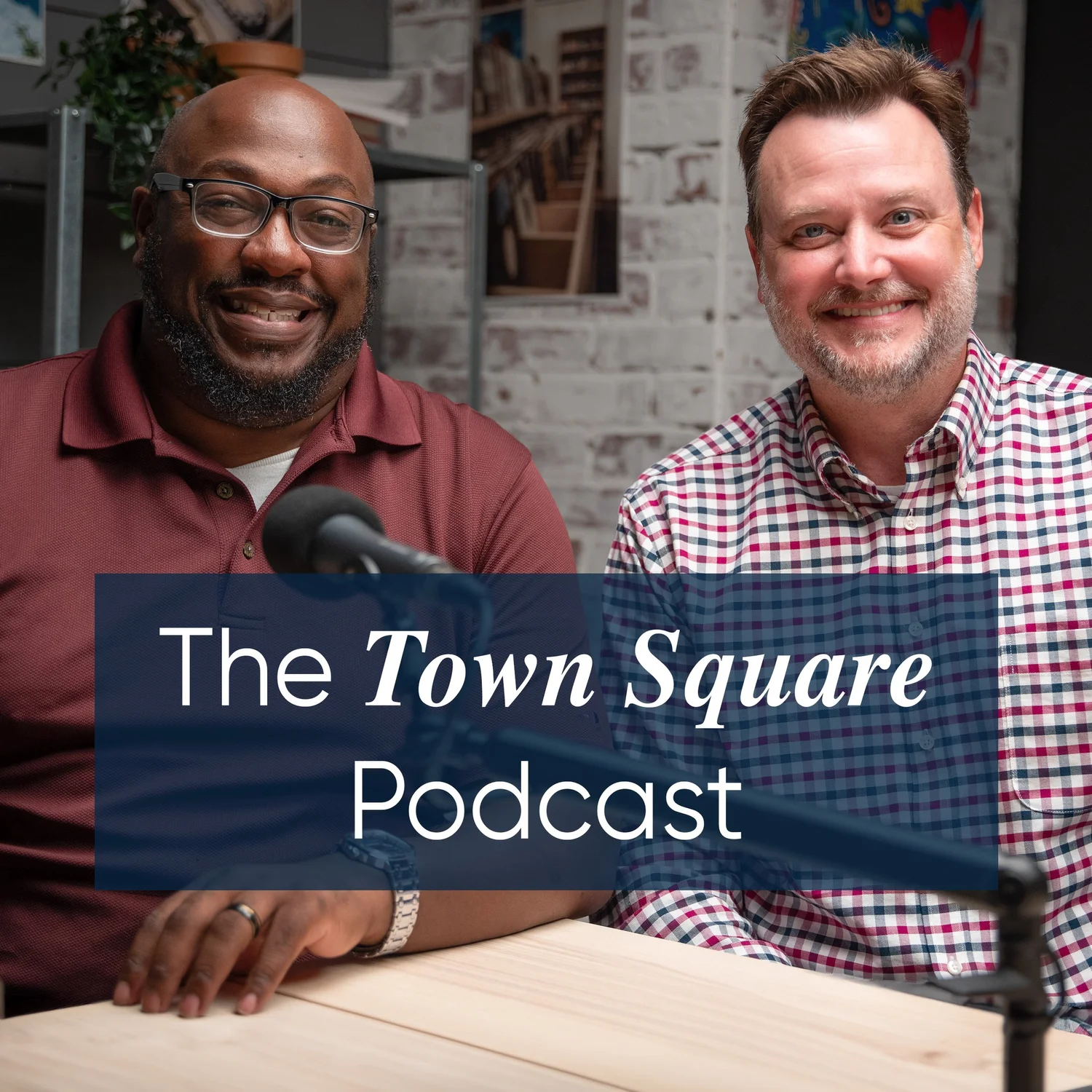
Apple Podcasts or Spotify. Or click on the photo below to watch on YouTube.

In Episode 82 of The Town Square Podcast, Trey Bailey and Gabriel Stovall continue their Candidate Conversations series with Georgia House District 113 candidate Hon. Alana Sanders. Representing a district that now covers only Newton County, Sanders joined the show to talk about her story, her preparation for state office, and the issues she believes matter most to local families.
As with the best Town Square conversations, this one was not just about policy. It was about purpose, pain, perseverance, and public service. Sanders shared a deeply personal story of loss, a strong vision for Newton County, and a clear message to voters: she believes this role is not a place to learn on the job, but a place to arrive prepared and ready to work.
A story shaped by family, education, and loss
Sanders begins by sharing her roots. Originally from Louisiana, she moved to Georgia in 1999 and to Newton County in 2007. She comes from a family of educators. Her father was a history teacher and band director, and her mother taught economics and social studies. Education, she said, was never optional in her household.
That foundation shaped the course of her life, but so did tragedy. Sanders lost both of her parents when she was still very young—her mother around the time of her high school graduation, and her father about a year and a half later. She described a frightening head-on collision the night of graduation, the emotional weight of her mother’s terminal diagnosis, and the painful reality of walking through those seasons while still trying to become an adult.
Those experiences, she explained, forced her to grow up quickly. They also deepened her sense of purpose. Rather than becoming defined by grief, Sanders chose to carry forward her parents’ legacy of service, advocacy, and investment in young people.
Why Newton County became home
Though she first purchased a home in Henry County, Sanders said a friend introduced her to Newton County in the early 2000s. After visiting and seeing the area for herself, she made the move and has now spent years raising her daughter and serving the community here.
That long local connection has shaped the way she sees public service. Over the years, residents have known Sanders in a variety of roles: commissioner, professor, lobbyist, organizer, and community advocate. Throughout the conversation, that wide range of experience came through clearly. She did not speak like someone new to public life. She spoke like someone who has spent years learning how systems work and how decisions affect everyday people.
A leader built in many rooms
One of the most interesting parts of the interview was hearing Sanders describe how her different roles have prepared her for higher office. Before serving locally, she worked behind the scenes in political organizing and on campaigns for state representatives. As a lobbyist, she has spent time at the Capitol fighting for issues, navigating legislation, and building relationships. As a professor and trainer, she has taught and presented on policy, technology, and leadership.
She said all of those experiences have prepared her for what would be a different level of public service in the Georgia House. Unlike county government, where a commissioner works with a small board, the legislature requires navigating far more personalities, more competing interests, and broader coalitions. Sanders argued that because she has already been in those rooms and already worked on legislation, the transition would not be a dramatic learning curve.
That readiness became one of the recurring themes of the episode.
People over politics
Again and again, Sanders returned to a phrase that captures her political philosophy: people over politics.
For her, the biggest issues facing families are not truly partisan issues. Housing affordability, mental health, Medicare, education, and property taxes are not just Democratic or Republican talking points, she argued. They are people issues.
That framework fit neatly with the spirit of The Town Square Podcast, where Trey and Gabriel often talk about the messy middle—the place where disagreement does not have to destroy relationships and where public conversation can still be civil. Sanders echoed that same posture, saying that elected officials should be able to fight hard for their districts and still sit down together afterward. Politics should not be personal. It should be purposeful.
What success would look like in the Georgia House
When asked what the most important responsibilities of the job would be, Sanders focused first on communication and accountability.
She said state legislators should host pre-session and post-session town halls so constituents understand what their representatives are supporting, how they are voting, and what actually happened during the legislative session. In her view, representation is not just about casting votes in Atlanta. It is about keeping residents informed, educated, and engaged.
She also emphasized that civic responsibility goes both ways. Elected officials must create spaces for accountability, but residents must show up. In one of the strongest parts of the conversation, she challenged voters not to complain about public decisions while also refusing to participate in the public process.
That two-way relationship—between elected officials and the people they serve—was central to her vision of representative government.
Housing affordability and property tax pressure
If one issue came up more than any other, it was affordability.
Sanders spoke at length about the housing crisis, rising rental costs, and the pressure many homeowners—especially seniors—feel from increasing property tax bills. She argued that the American dream of homeownership has become much harder to reach and much harder to sustain.
One example she shared was especially powerful: seniors who have paid off their homes but still need loans or part-time work just to keep up with property taxes. In her view, that signals that something is fundamentally wrong with the way home values are being assessed and taxed.
She also challenged the current system of assessments in Georgia, saying “the math is not mathing.” For Sanders, this is not simply a local complaint. It is a statewide policy problem that calls for legislative attention and reform.
Public education and school funding
Another major section of the interview focused on public education. Sanders made clear that she supports giving families options, but not at the expense of underfunding the schools most families rely on.
She defended public education as essential not just academically, but socially. Schools provide mentoring, meals, stability, and support for young people whose needs go far beyond a classroom lesson. For many students, school is one of the only consistent places where caring adults are present in their lives.
That perspective connected with Trey’s own role on the school board, and the conversation turned toward how the state could better support local systems. Sanders argued that school funding and property tax strain are deeply connected and that state leaders need to understand the practical consequences their choices create for districts like Newton County.
Infrastructure: planning before growth
Infrastructure readiness was another major campaign issue Sanders discussed.
She argued that Newton County has often approached development backwards—allowing large-scale housing growth and then scrambling afterward to widen roads, build schools, and address public safety needs. In other words, the county has often been reactive instead of proactive.
As a potential state representative, Sanders said part of her role would be helping bring the right funding to the county while also working more closely with local officials, the school system, law enforcement, fire services, businesses, and cities. One of her sharpest observations was that too many public bodies operate in silos. They are not talking enough before major decisions are made.
For a fast-growing county, she sees that lack of coordination as a major problem.
Data centers: not against them, but against the current approach
The podcast also turned to one of Newton County’s hottest topics: data centers.
Sanders made an important distinction. She said she is not anti-data center. She understands that AI, cloud computing, and digital infrastructure are not going away. In fact, given her background in education and technology, she has taught others how to incorporate AI tools into their work.
Her concern is not the existence of data centers. It is the lack of regulation and the way they are being placed and approved.
She praised local officials for taking steps like moratoriums to slow the process down and create space for better research and regulation. She argued that local governments need clearer rules, especially around water use, proximity to neighborhoods, and long-term environmental and infrastructure impacts.
Her position was one of the more nuanced moments of the episode: acknowledging technological reality while insisting that growth must be handled responsibly.
Transparency and truth-telling
Another defining theme of the conversation was transparency.
Sanders described herself as someone who tells the truth plainly, even when it rubs people the wrong way. She said transparency is not optional for healthy public trust. Residents deserve to know what is happening in their county and why public officials are making the decisions they make.
That led to one of the most memorable lines of the episode: the difference between a public servant and a politician. In Sanders’ telling, public servants serve the community; politicians serve themselves.
That framing sums up how she wants to be seen—and how she wants to govern.
Youth programming and recreation
When asked what issue does not get enough attention in Newton County, Sanders pointed immediately to youth programming and recreation.
This part of the interview felt especially passionate. She described hearing directly from young people and families who feel there is simply not enough for kids to do in Newton County. She argued that the county has often talked about doing more for youth without actually following through in the right way.
One of her strongest criticisms was that adults too often design youth programs without actually asking youth what they want. She described visiting schools, listening to students, and learning that what many of them wanted was not a traditional boys and girls club model, but something more modern, creative, and practical—technology spaces, gaming rooms, study-friendly café environments, green screen tools, and access to multiple support services in one place.
She shared a vision of a youth innovation center that could include wraparound supports, nonprofit partners, commercial components to help fund operations, and programming designed around what today’s students actually need and want.
It was one of the clearest examples in the interview of Sanders moving beyond general rhetoric and speaking in concrete terms.
Economic development on the western side of Newton County
Sanders also addressed the issue of sales tax leakage—how many Newton County residents, particularly on the western side, spend their money in Rockdale County because that is where more of the desired retail and restaurant options are located.
She argued that better economic development in Newton County could help keep that money local and eventually offset some of the tax burden residents feel elsewhere. For her, this is not just about attracting random growth. It is about being strategic and bringing in the kinds of businesses residents actually want and will support.
This part of the conversation connected economic development to quality of life, affordability, and long-term county sustainability.
Staying grounded in faith and accountability
Toward the end of the interview, Trey asked Sanders how she stays grounded while wearing so many hats and carrying so much of other people’s pain and frustration.
Her answer was simple and revealing: faith, accountability, and purpose.
She said politics can drive a person crazy if they do not have the right people around them—people who are not just yes-men, but people who tell the truth, offer support, and help keep perspective. She also said public service must be rooted in genuine calling. If someone enters politics just for the title, they will not last. But if the work is truly purpose-driven, there is strength to keep going even through criticism and challenge.
The closing message to voters
The episode closed with Gabriel's notorious “magic bullhorn” question: why should people vote for Alana Sanders?
Her answer pulled together nearly everything discussed in the interview. She said voters should support her because she has already done the work. She has written bills, worked at the Capitol, fought for local needs, built relationships, and learned how the process operates. In her view, the Georgia House is not a place where Newton County can afford to send someone who needs extensive on-the-job training.
Because House terms are only two years, she argued that the district needs someone who can be effective immediately.
That closing message fit the title of this episode perfectly: Ready on Day One.
Final thoughts
This was a strong episode in the Candidate Conversations series because it gave listeners more than campaign language. It gave them context. Sanders came across as deeply rooted in service, shaped by hardship, experienced in government, and focused on practical issues that matter in Newton County right now.
Whether listeners agree with every position she holds or not, the conversation offered a meaningful look at how she thinks, what she values, and how she would approach the role if elected.
And that is exactly what this series is supposed to do.
Contact Information for Hon. Alana Sanders:
Contact Alana Sanders
Website: repsanders.com
Phone: 404-374-3677
Social Media: Search “State Representative Alana Sanders”
Episode Sponsors
Luther Rice College & Seminary
Luther Rice College & Seminary equips students for Christian leadership through flexible, fully online undergraduate, graduate, and seminary programs rooted in biblical truth. Whether you are pursuing ministry, theology, or higher education with a Christian foundation, Luther Rice offers trusted academic training designed to fit real life.
Website: lutherrice.edu
Phone: 770-484-1204
Relevant IT Services
Relevant IT Services helps businesses stay secure, connected, and productive with reliable IT support, cybersecurity solutions, and tailored technology services. If your organization needs a trusted partner to manage the tech side of business, Relevant IT Services brings practical expertise and responsive support.
Website: relevantitservices.com
Subscribe, like, and share to help more people in Newton County stay informed.